We detected 9,872 companies using Bugsnag and 492 customers with upcoming renewal in the next 3 months. The most common industry is Retail (67%) and the most common company size is 2-10 employees (77%). We find new customers by detecting JavaScript snippets or configurations on customer websites.
The count of new companies shown here may differ from the total in the table above. This is intentional. We apply a consistent baseline to ensure month-over-month comparisons are apples-to-apples rather than affected by when data was first collected.
Loading trends...
No trend data available for this vendor.
Market Insights
🏢 Top Industries
Retail5654 (67%)
Retail Apparel and Fashion368 (4%)
Food and Beverage Services161 (2%)
Manufacturing151 (2%)
Personal Care Product Manufacturing116 (1%)
📏 Company Size Distribution
2-10 employees7489 (77%)
11-50 employees1117 (12%)
51-200 employees583 (6%)
201-500 employees225 (2%)
1 employee employees109 (1%)
📊 Who usually uses Bugsnag and for what use cases?
Source: Analysis of job postings that mention Bugsnag (using the Bloomberry Jobs API)
Job titles that mention Bugsnag
i
Based on an analysis of job titles from postings that mention Bugsnag.
Job Title
Share
Software Engineer
35%
Senior Software Engineer
28%
DevOps Engineer
12%
Mobile Engineer
10%
QA Engineer
8%
I noticed that 96% of the roles mentioning Bugsnag are individual contributor positions, with Software Engineers and Senior Software Engineers representing 63% of all postings. The buyers appear to be engineering leadership, specifically Engineering Managers, Directors of Engineering, and CTOs who are building or scaling product development teams. These leaders are focused on operational excellence, with repeated emphasis on observability, monitoring, and production stability across web and mobile applications.
The day-to-day users are predominantly backend, mobile, and fullstack engineers who integrate Bugsnag into their deployment pipelines and monitoring workflows. These practitioners use it alongside tools like Sentry, Datadog, New Relic, and Firebase for error tracking and crash reporting. Mobile engineers especially rely on it for iOS and Android crash monitoring, while backend teams use it to maintain system reliability in production environments running on AWS, Kubernetes, and various microservices architectures.
The pain points center on scaling while maintaining quality and velocity. Companies repeatedly mention needing to "ensure the quality of delivered functionality," "monitor and guarantee the health and performance of the product," and "troubleshoot and debug issues within existing codebases." Several postings explicitly call for experience with "observability in aplicativos cloud" and "comprehensive monitoring and logging" to support rapid growth. The emphasis on CI/CD automation, performance optimization, and real-time error detection reveals organizations striving to ship faster without sacrificing stability.
👥 What types of companies use Bugsnag?
Source: Analysis of Linkedin bios of 9,872 companies that use Bugsnag
Company Characteristics
i
Shows how much more likely Bugsnag customers are to have each trait compared to all companies. For example, 2.0x means customers are twice as likely to have that characteristic.
Trait
Likelihood
Industry: Apparel & Fashion
15.5x
Industry: Cosmetics
14.9x
Industry: Retail Apparel and Fashion
14.4x
Funding Stage: Equity crowdfunding
13.7x
Funding Stage: Convertible note
9.6x
Funding Stage: Angel
8.8x
I noticed that Bugsnag's typical customers are predominantly e-commerce and direct-to-consumer brands selling physical products. The majority are online retailers operating Shopify stores or similar platforms, spanning everything from apparel and jewelry to skincare, pet products, food items, and home goods. There's a strong concentration of lifestyle brands, beauty products, and fashion companies. Beyond retail, I see a smaller segment of SaaS companies, hospitality businesses, and service providers, but the core customer base is clearly product-focused businesses that need reliable online storefronts.
These are primarily small to mid-sized businesses in growth mode. The employee counts cluster heavily in the 2-10 and 11-50 ranges, with very few exceeding 200 employees. Most show no funding stage or are bootstrapped, suggesting they're founder-led businesses focused on profitability over venture scaling. The few that have raised capital are typically at seed or Series A stage. The exception is software companies like Gorgias and Workvivo, which are more mature with substantial funding.
🔧 What other technologies do Bugsnag customers also use?
Source: Analysis of tech stacks from 9,872 companies that use Bugsnag
Commonly Paired Technologies
i
Shows how much more likely Bugsnag customers are to use each tool compared to the general population. For example, 287x means customers are 287 times more likely to use that tool.
I noticed that Bugsnag users have an unmistakable profile: they're e-commerce companies, and specifically ones built on Shopify. The presence of Shopify at nearly 24 times the normal rate, combined with Judge.me for product reviews and Klaviyo for email marketing, tells me these are online retailers focused on direct-to-consumer sales. This isn't enterprise software or SaaS companies. These are businesses selling physical products online.
The pairing of Bugsnag with Shopify makes perfect sense because e-commerce sites can't afford downtime or checkout errors. Every bug directly costs revenue. When I see Klaviyo appearing 33 times more often, that reinforces the e-commerce angle since Klaviyo specializes in email flows for abandoned carts and post-purchase sequences. Judge.me's strong correlation adds another layer because product reviews are critical for conversion rates in online retail. These companies are monitoring their entire customer journey, from browsing to checkout to post-purchase engagement, and they need to catch errors at every step.
The full stack reveals marketing-led growth companies that depend heavily on paid acquisition. Facebook Ads appearing 11 times more frequently shows they're buying traffic and need to optimize conversion rates aggressively. Google Search Console suggests they're also investing in organic search. These aren't early-stage startups experimenting with product-market fit. They're growth-stage retailers with real revenue who can justify spending on error monitoring because they understand that technical issues directly impact their bottom line. They've moved past basic operations and are optimizing for scale.
Alternatives and Competitors to Bugsnag
Explore vendors that are alternatives in this category

 Poodle and Blonde
 Picadilly Fashions
 Pawesomeproducts.com
 Nalu TV
 Outbound Lighting
 Montem Outdoor Gear
 Matcha Outlet
 Lulu's Holistic Skincare
 Love By Luna
 BloodyGreen
 KNT365
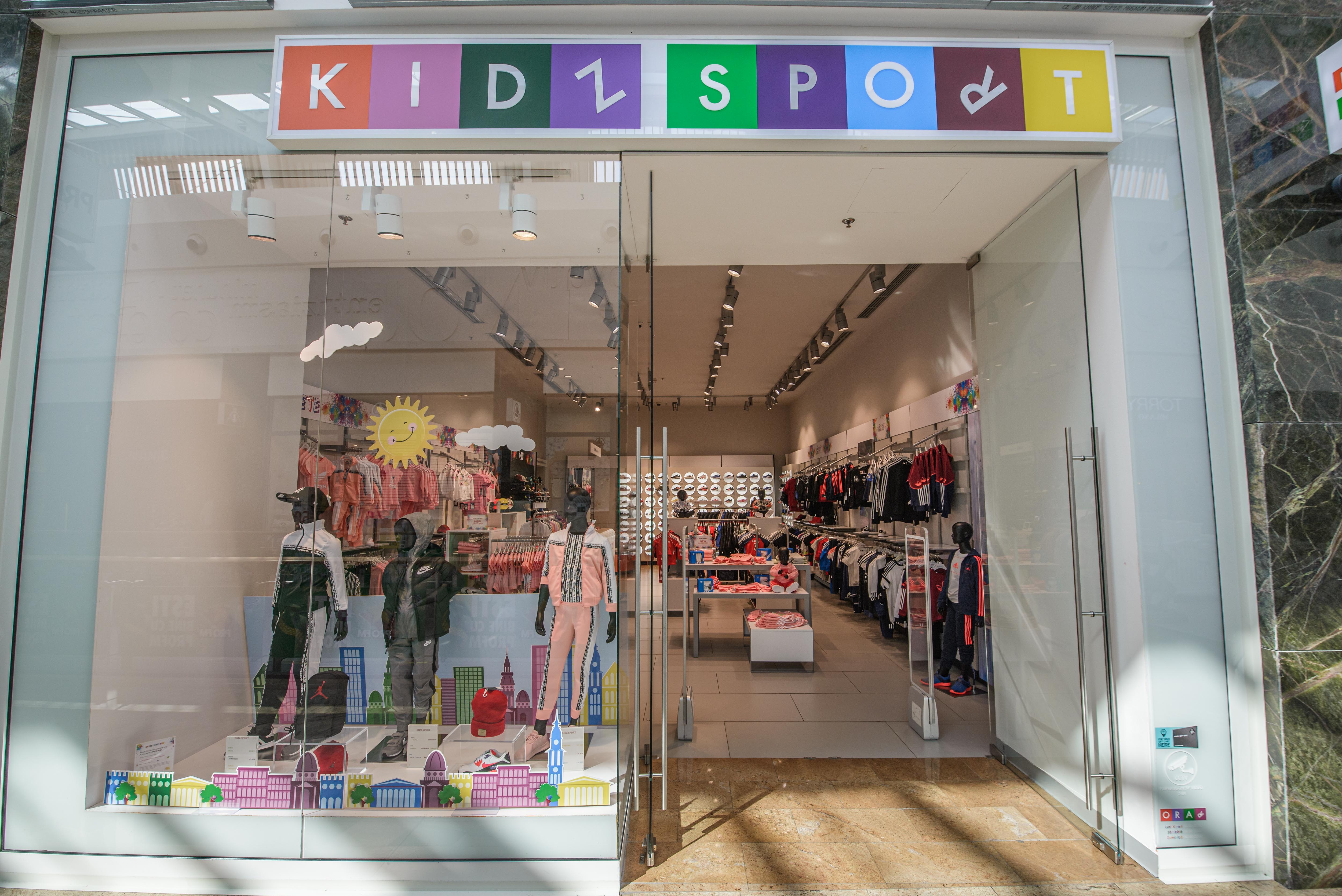 Kidz Sport
 Kennedy Parker
 Kahwa Coffee Roasters
 Joshu+Vela
 Innoxa